Domestic Gigs
Slippen
With a rich heritage, the Slippen is a firm favourite within the rowing community.
Originally named ‘Bernice’, the Slippen was built by Peters of St Mawes in 1830 for the pilots of St Martins.
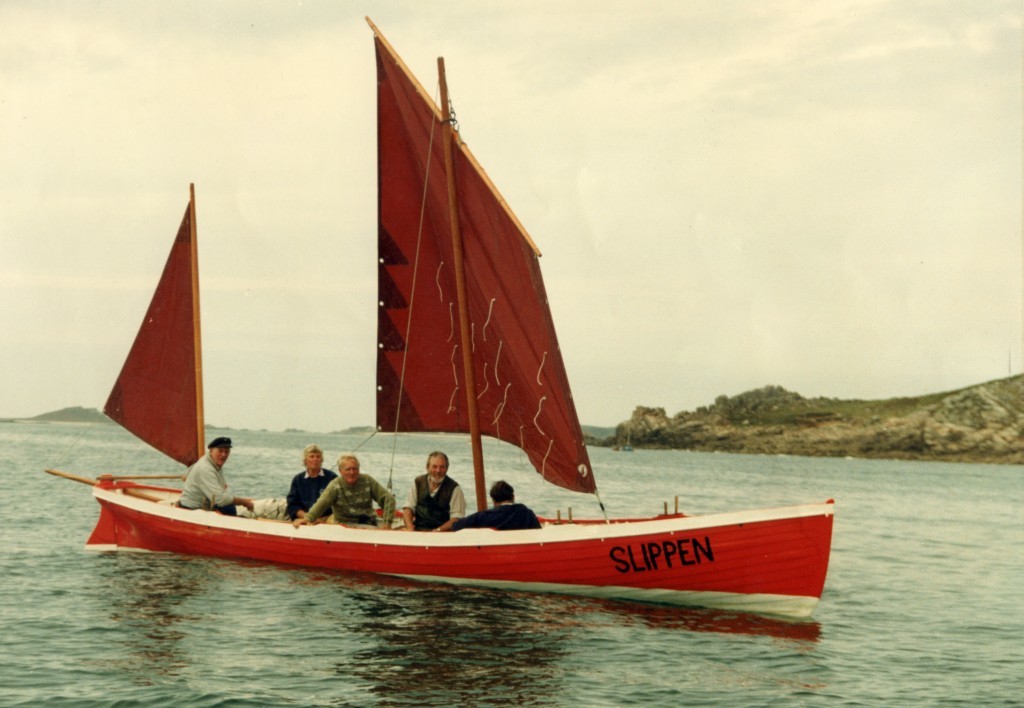
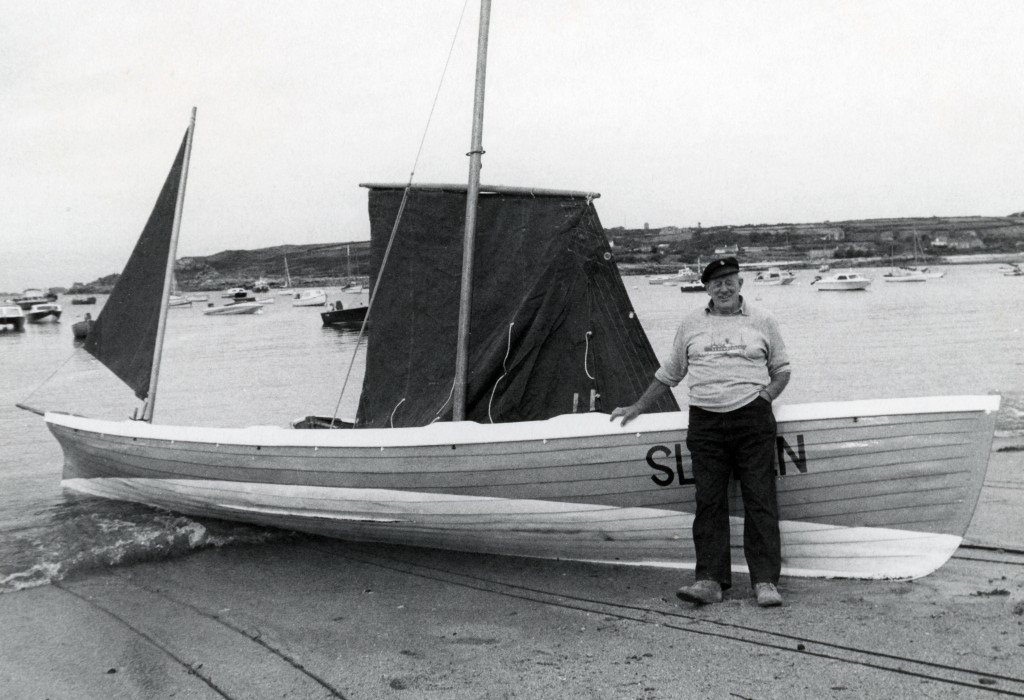
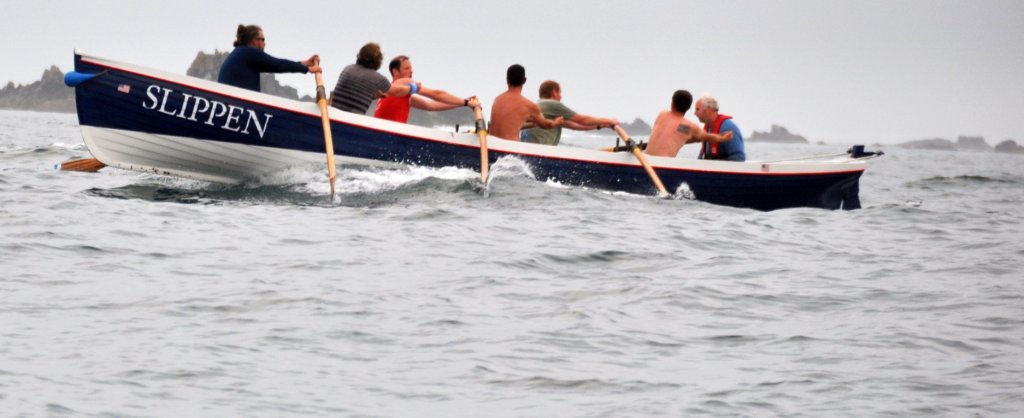
Her name was changed to Slippen when she was sold to the pilots of St Agnes in 1869. Unlike most gigs, the Slippen is short, with a total length of 28 feet and a beam of 5 feet 4 inches. One of her most famous adventures was to the T. W. Lawson, the largest schooner ever built. St Agnes pilot, Billie Cook Hicks, was put aboard until the ship broke free from her anchorage and wrecked near Annet. The Slippen rescued one man from Annet, before returning to rescue the others from Hellweathers rocks.
In the early 1950s, the Slippen was sold to Newquay rowing club on the understand that she would be sold back to Scilly. As one story goes, when Newquay carried out renovations, they removed one 6 foot long blank that was such high quality wood the two ends could be brought together forming a complete circle.
Golden Eagle
Built in 1870 by Peters for the pilots of Bryher, the Eagle is possibly the finest of the 19th century gigs.
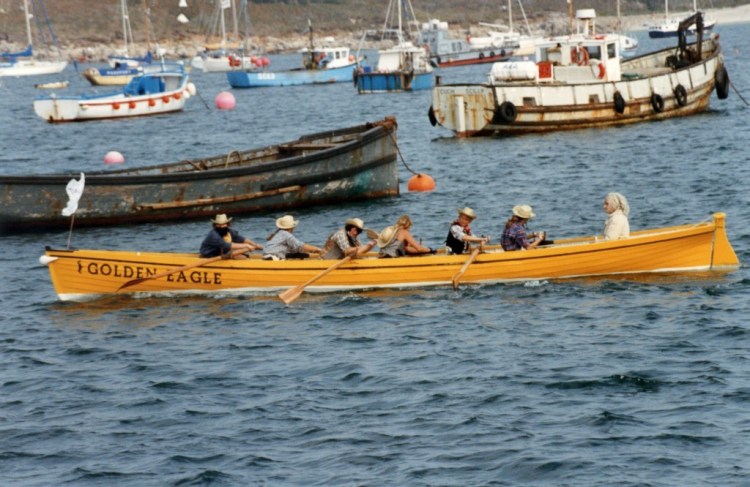
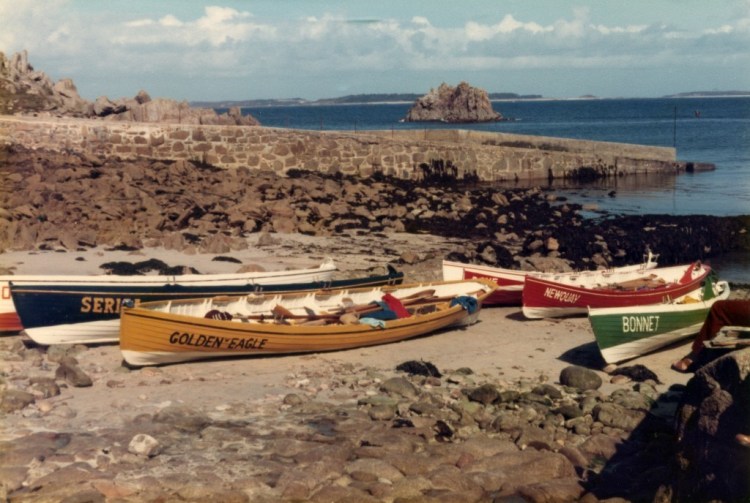
At 30’4″ long and an original beam of 5’2″, the Golden Eagle is one of the fastest 19th century gigs built. Named after the American gold pieces that had been used to purchase her, the Eagle has a rich history in wreck and racing. In 1885 she attended the wreck of the Sussex and saved many of the crew and cattle on board. On the night of the 25th October, 1899, she put to sea with the gig ‘Czar’ and rescued crews from two ships wrecked on the same rock the same night. For the owners of the Eagle, the Minnehaha was particularly rich, where she took many cattle lashed to the gunwales and deposited them on the now uninhabited Samson – the last cattle to be allowed to graze there.
Her beam was pulled into 4’10”, making her one of the fastest heritage gigs in the club and one of the top picks for the island’s domestic racing crews.
Bonnet
Built in 1830, Bonnet is one of the oldest Gigs in the world.
The Bonnet is one of the oldest racing Gigs, built in 1830 by the Peter’s family and bound for St Martin’s, she was named after a lady who used to wave her bonnet at the crew wishing them safe passage on their voyage. Rumoured to have made the 250 mile round trip from Scilly to Roscoff 25 times under the command of pilot John Nance, who on one voyage rode out a storm for 30 hours by keeping her head to wind.
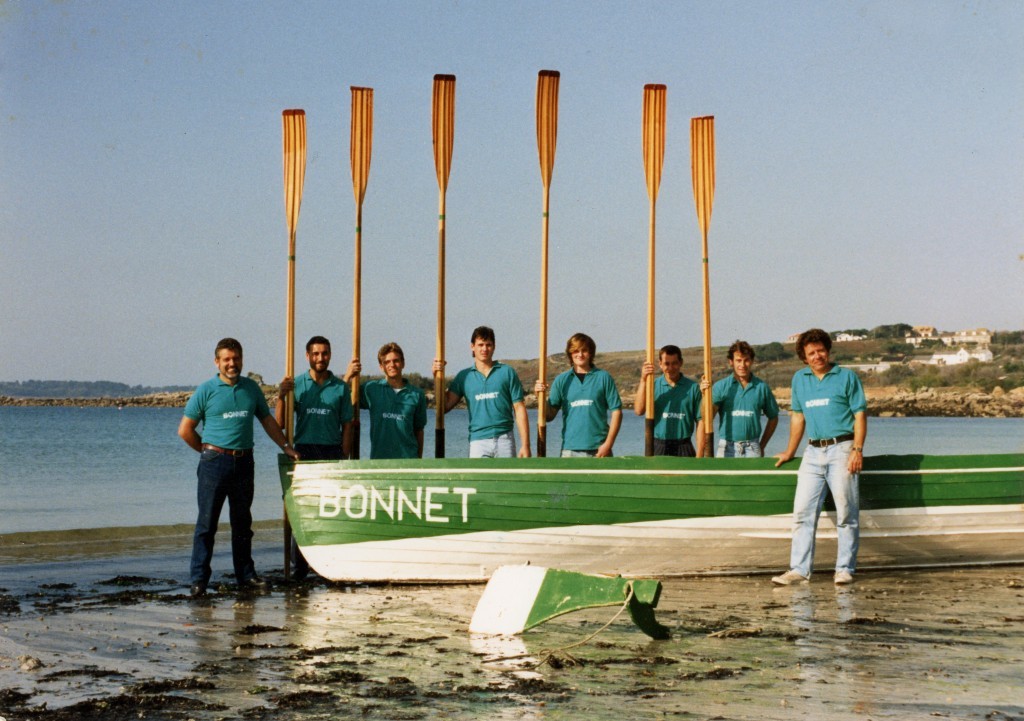
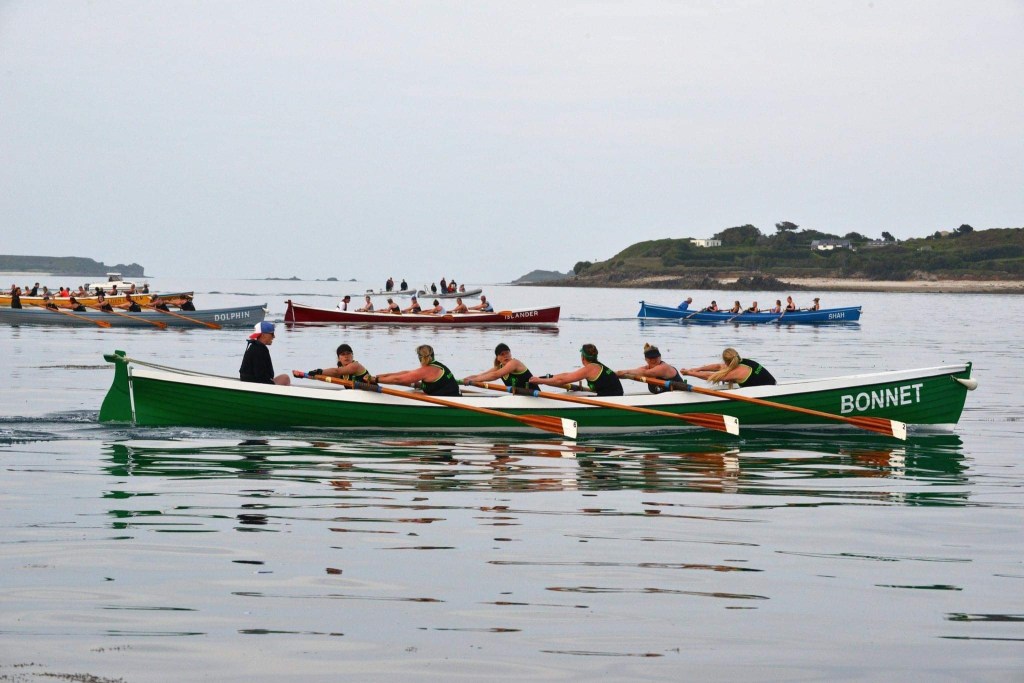
In 1953 Newquay Rowing Club purchased the Bonnet from Tresco along with two other island gigs, the Golden Eagle of Bryher and the Slippen of St Agnes. All three boats were transported to Padstow for complete refit. Three years on and the Bonnet is considered to be to slow, again she is sent to Padstow this time to have her top plank removed and to be brought in by 4 inches
In 1963 the Bonnet returns to the islands, this time to her current home on St Mary’s where she was kept on loan from Newquay Rowing Club until being purchased in 1973.
Serica
It is believed that the Serica was built relatively heavy to give the older gigs a chance.
The Serica was launched in 1967 and is very significant for being the first gig ever built in the 20th century. Built for the Bonnet (on loan back from Newquay) crew by Tom Chudleigh at Well Cross Yard (next to the Rechabite Slip) on St Mary’s, it continued the tradition of gig building on the Isles of Scilly which is alive to this day. It is named after an old shipwreck.
Tom Chudleigh copied the Bonnet for his first two gigs (the second was the Dolphin for St Martins in 1969). It is believed that the Serica was built relatively heavy to give the older gigs a chance, that had come out of retirement in the 1960’s.
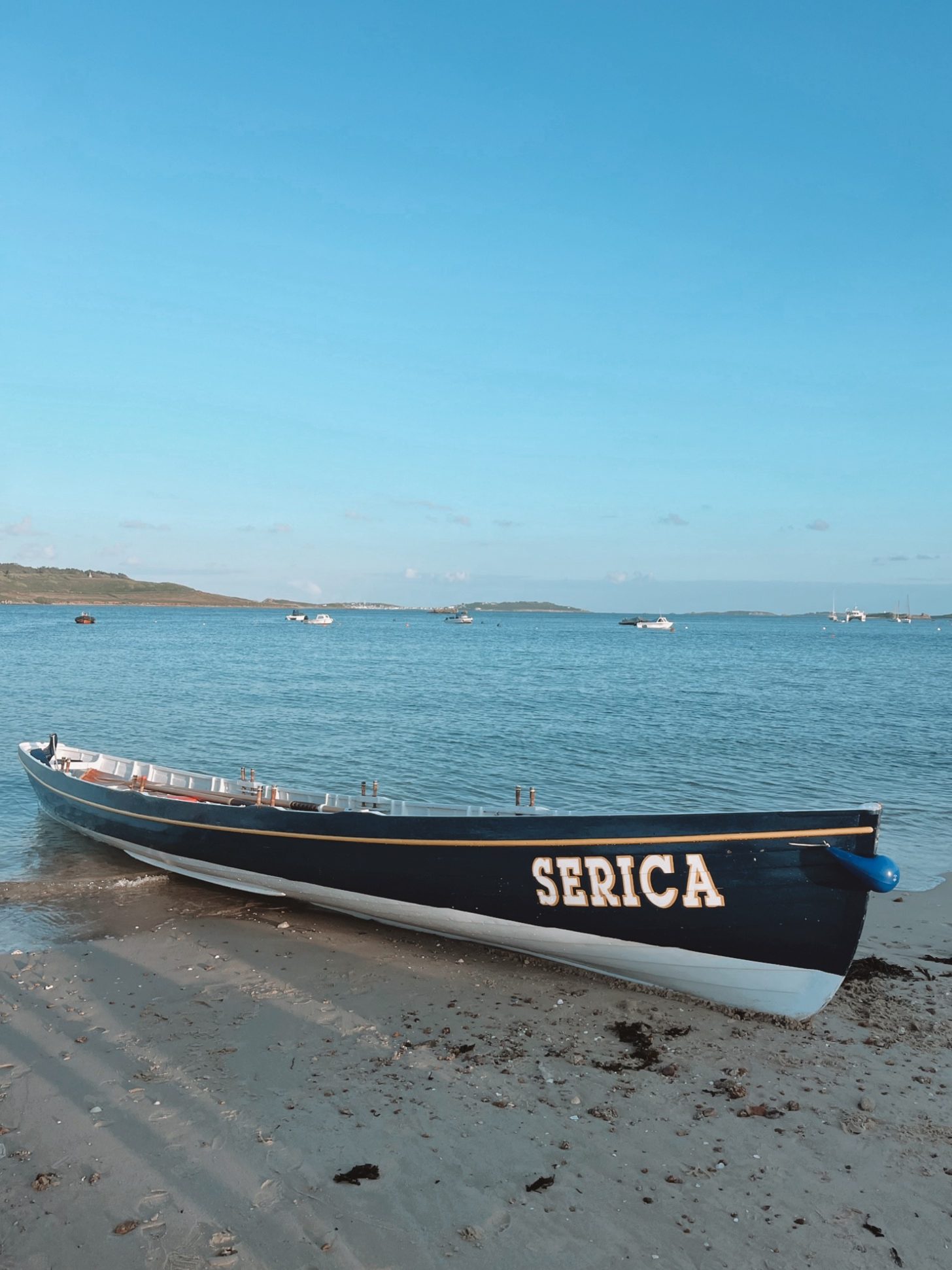
The Serica has been rowed to the mainland multiple times and attempted to row to France twice in 1969 but bad weather forced them to abandon each time.
The Serica has been successful in its time, a very comfortable gig to row but definitely not the lightest! In his 1975 book ‘Gigs and Cutters of the Isles of Scilly’, Alf Jenkins says the Serica has “won several races but she needs a good crew to pull her”. The same is true today although the number of races won has declined.
Islander
The Islander is a very fast gig if rowed with power and patience.
The Islander was built in 1989 to the 32 foot long ‘Treffry’ specification that is now the standard racing gig design, with the intention of racing against mainland crews. This was Tom Chudleigh’s last gig that he built for the islands and it isn’t shareholder owned like the other domestic gigs.
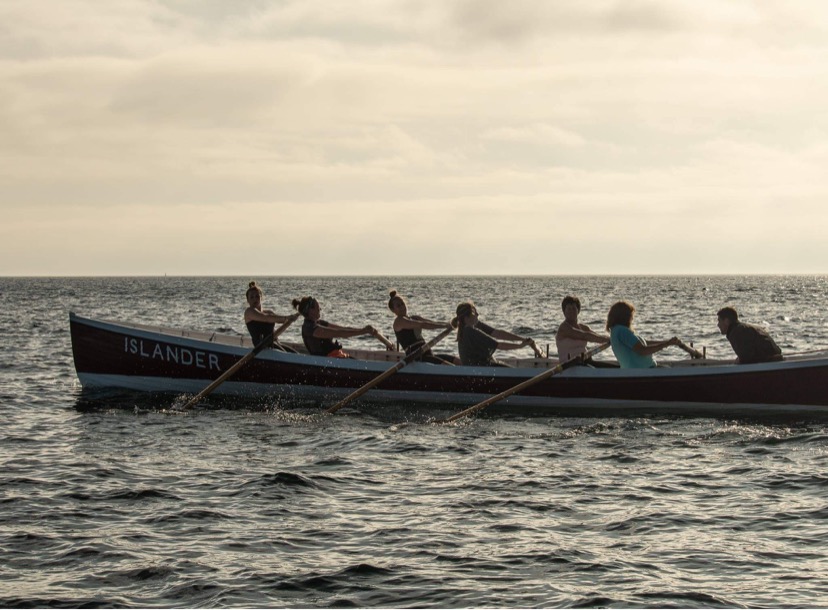
With the popularity of rowing now, the Islander has become part of the domestic fleet, but serves well as back up to our modern racing gigs.
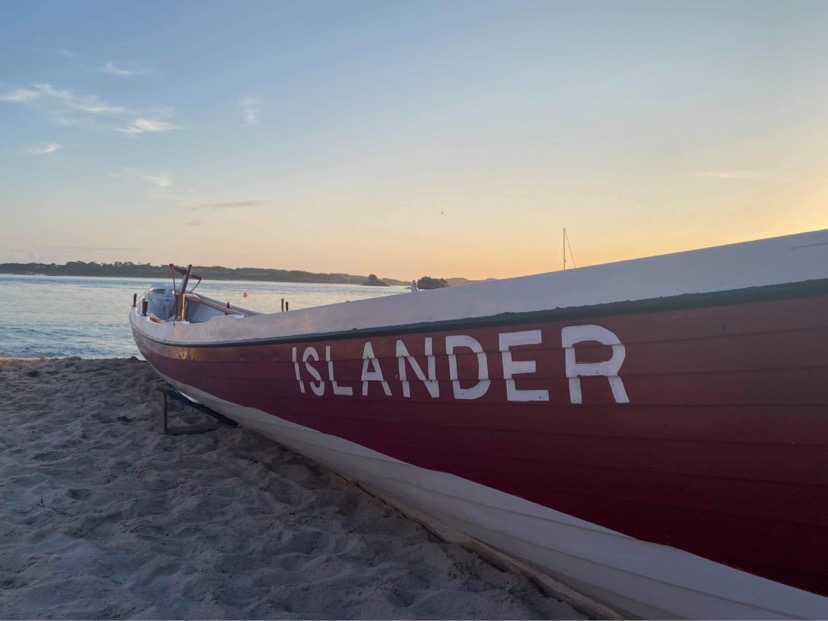
The Islander is a very fast gig if rowed with power and patience. It was very successful competing against mainland crews and won early mens world championships. It is a noticeably fine gig when viewed from the bow which helps it cut through the water well.
Nornour
The Nornour is a very fast gig, probably the fastest of the domestic fleet.
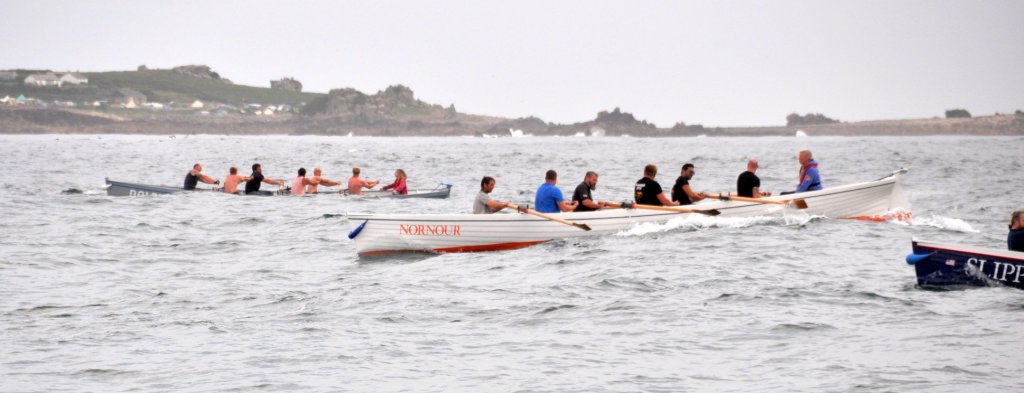
The Nornour, named after the Eastern Isle was built in 1971 for a group young men- 6 out of 7 of whom were under the age of 21. They raised money for the gig by growing potatoes, a sponsored row to Sennen and back and then to Roscoff in France
Built in 1971 by Gerald Pearn in Looe, the Nornour has an extra rowing position for the pilots seat and is said to be built a plank higher than the usual 12 plank design. Some older photos show the gig to be varnished and has been sailed successfully.
The Nornour is a very fast gig, probably the fastest of the domestic fleet. With a relatively high gunwhale it is easier to row in a beam sea and it will run very fast with the wind and sea.
 St Mary's Gig Club